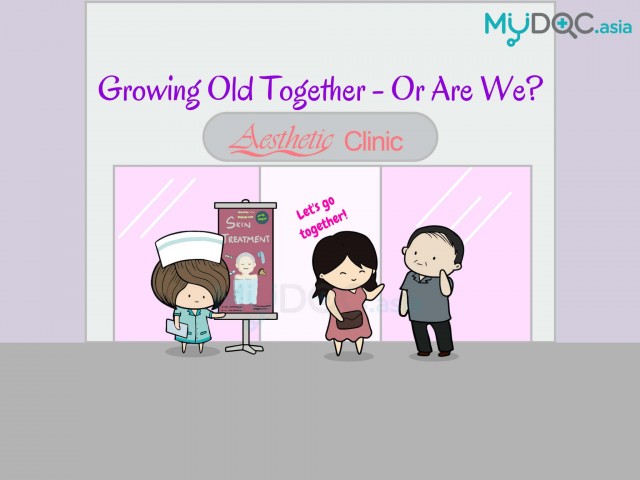
According to recent research, couples who have been together for a long time tend to grow into becoming like each other. This includes lifestyles, norms, and habits. As the years go by, we pick traits up from our partners and undergo changes that we don’t when we were single.

In other words, the aging process, year by year, is experienced by both partners in a couple together. In a collaborative environment where couples live together, they make decisions together and experience the outcomes together. For example, a husband can finish a line spoken by his wife, and his wife can have a craving for the same food as her husband at a certain time.
This, of course, can be due to familiarity developed through the years. What, then, about physical similarity? While partners generally don’t look exactly like each other per se, it is found that doctors who treat an individual, having known the health condition of the latter, can immediately derive clues about his or her partner’s condition. For instance, a woman’s visit to an aesthetic clinic for a facelift treatment can mean the possibility of her husband experiencing similar, if not worse, signs of aging.
However, this does not necessarily mean that you’d see couples who look similar to each other, especially in terms of age. Stereotypically at least, we ladies would keep up with their cosmetic needs at all cost (and hence the billion-dollar cosmetic and beauty industries)! On the other hand, men (again, stereotypically at least,) would be more content on being the ‘beast to their beauties’. What about looking good together, aging gracefully and elegantly, hand in hand in a picture-perfect couple image?

With the changing times today, gender differences are no longer an issue when it comes to medical aesthetics. From tagging along with their wives to the aesthetic clinic, husbands now consult medical aesthetic doctors with their partners or on their own! The aging process is experienced by both together, so a visit to the aesthetic clinic together could go a long way in supporting each other and making the visit much more pleasant (of course, men footing the bill is also another plus! teehee!).
With the rise of social media like Facebook, Instagram, and Youtube, appearance has started to matter to many, even to those who are usually defined by masculinity rather than facial appearance. We start to show concerns on comments by our peers, or how we’d look like in that photo or video posted on our social media page which would receive public attention.
For women, the idea of medical aesthetics isn’t something new, with a wide range of treatments and products available to choose from in their aesthetical health journeys.

On the other hand, despite the popular belief of the lack of options available for men in medical aesthetics, opportunities are aplenty in this day and age. For example, male pattern baldness is a common occurrence for men, with receding hairline around the temple area and hair thinning particularly at the vertex area or at the top center of the head. Hair loss problems have also been found to be the most dreaded aesthetic problem for men, according to numerous surveys. Other than to make sure there isn’t anything on their faces, practically the only other reason for men to look in the mirror is to look at their hair.
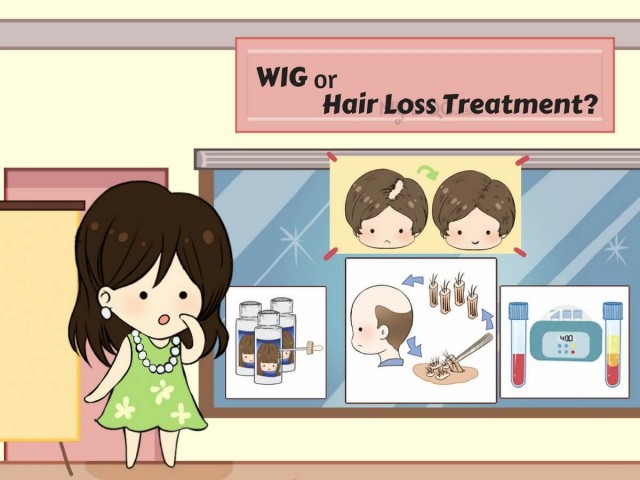
Plus, to highlight the severity of this problem amongst men, is that at least 70% of them could possibly experience permanent hair loss, or otherwise known as androgenetic alopecia, compared to 40% for ladies. Whether it is due to genetical reasons or medical conditions, hair loss is indeed treatable. Some of the medicines available for the treatment of hair loss problems include Propecia (oral) and Minoxidil (topical). In some cases, injections can be administered by doctors, such as localised corticosteroid injection which targets a certain area or patch badness.
If you wish to avoid medicines or drugs, you could also consider meso-injections prepared by medical professionals. A potent mix of ingredients is injected into the problem area to activate dormant hair follicles and to stimulate the scalp to aid with hair growth. There are also hair implants, with fibre-made hairs being implanted directly onto the scalp for the appearance of fuller hair quickly.
One popular and newer addition to the options of hair loss treatments is the Follicle Unit Extraction, or also known as FUE in short. FUE is a minor surgical approach where the patient has his healthy hair follicles removed and transplanted onto the affected areas. These hair follicles are extracted from the root up and carefully planted onto the site of hair loss. This is usually a long and delicate procedure. Doctors will usually predetermine the density and pattern of hair in order to achieve natural looking hair flow and satisfactory post-surgery results.

Today, FUE is no longer only done on the head. There are now requests for hair transplants on eyebrows for a bushy and authoritative appearance. FUE is also done for men who wish to increase facial hair density for a manly moustache, or on the chest as well. For the ladies, FUE is also done on eyelashes for thicker, longer appearances - no mascara needed! Take a look at the clinics offering FUE treatments in Malaysia here!
So, what do you know? A trip to a medical aesthetic clinic together may be just what you need to stay beautiful and happy together after these long years!
 Juliet’s Note: Never visit a beauty centre or unqualified medical aesthetics clinic for your medical aesthetic procedure as these medical procedures can only be performed by verified doctors with qualifications. If you would like to share your story with me or if you have any questions, feel free to drop a message at [email protected]!