
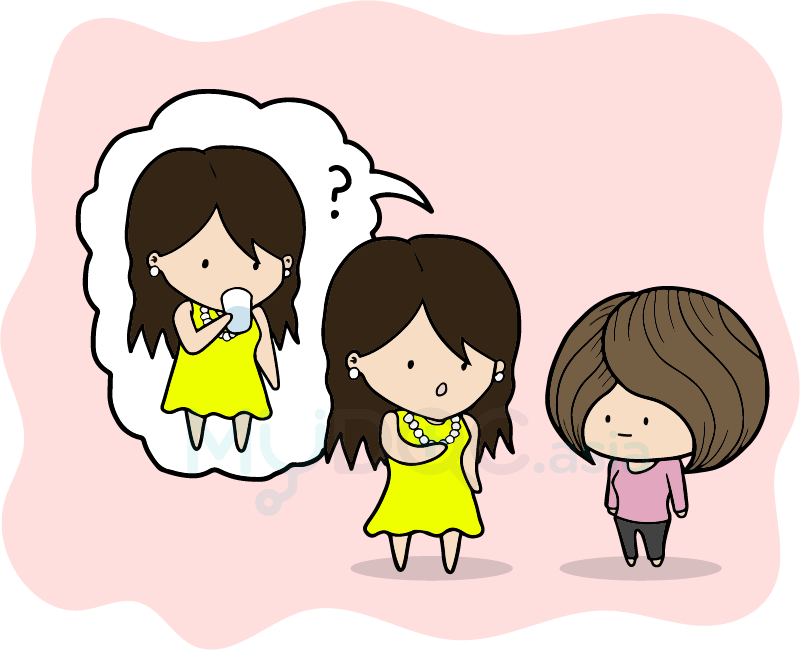
Lisa cares about her physical appearance very much. To maintain her beautiful body shape, she consistently practices a strict diet plan – she doesn’t touch any foods with high calories, additives or preservatives, as well as fast foods. However, there’s only one thing she couldn’t sacrifice – cold drinks.
One day, Lisa came to me and asked, “Juliet, you wrote about how taking spicy foods wouldn’t cause acne. Will I get period pain after drinking cold water or iced drinks? Besides that, what should I be careful of during my periods?”
Is it true that drinking cold drinks or iced waters would lead to period pain? Lisa asked a good question, as education on menstruations, or periods, are women’s most essential homework. However, many women don’t know much about this “best friend” of theirs. Since Juliet Station is all about “guiding you through the fog of healthcare”, let’s talk about things you should take note of when you’re on your periods!
Menstruating (On Periods) vs. Menstrual Cycles
Before I go on, I’d like to briefly highlight the differences between menstruating and menstrual cycles.
While you’re menstruating (while you’re on your period): It refers to a few days in a month when you’re “losing blood” (it’ll most likely take 3-7 days).
Menstrual cycles: The duration between the first days of your periods within 2 months consecutively.
Now do you understand the differences between menstruating and menstrual cycles? Then let’s look at what you should avoid when you’re on your periods:
1. Hair removal waxing

Weird? Like what…I need to pick a good date for hair removal?
According to studies, the ovarian secretion of oestrogen level reduces during menstruation, which further reduces our pain threshold. Thus, the pain sensing nerves become more sensitive. If you do any hair removal treatments during your period, you might experience stronger pain than usual!
2. Pulling out a tooth (tooth extraction)

Similar to hair removal waxing, if you are getting a tooth extracted on your period, the pain you experience will be intensified. In addition, when you’re on your period, your bodily function of blood clotting can be relatively poor. Therefore, if you’re getting a tooth extraction or any operation during this time, you might lose a lot of blood.
So when is the best time for a tooth extraction?
Generally, the best time to have a tooth extraction would be on the 8th-14th day after your period, as you’ll bleed less after your tooth is pulled out, and you’ll experience less pain.
3. Wearing your sanitary pad for too long
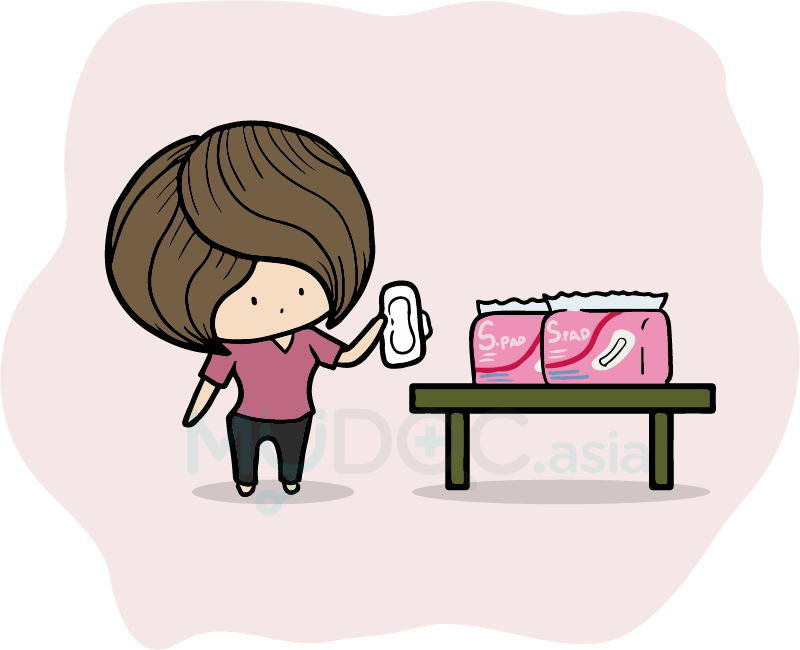
Many women have a habit of changing sanitary pads only when they thought of it, or when they feel that their pads are “heavy (full)”. Some would even try to save costs by reducing the number of sanitary pads – by using high-absorbent maxi pads! This is a huge mistake!
Under moist and warm conditions, a bad bacteria can grow in your menstrual blood, which easily causes diseases at your private parts. Most doctors would recommend you to change your sanitary pads frequently, regardless of the amount of your menstrual blood flow. It would be best if you could change your sanitary pads regularly once every 3 hours. Also, if you have heavy flow, it’d be better for you to change more often.
Besides sanitary pads, many women do not change their high absorbent tampons as well. In order to avoid any infections, The Health Ministry of various countries have properly documented the suggested time of usage for tampons. Health experts from various countries recommend that tampons should be used:
- By replacing at least twice a day - Federal Ministry of Health (Germany)
- Up to 8 hours per tampon - U.S. Food and Drug Administration (FDA)
- Best by replacing once in every 6-8 hours - Hungarian Society of Obstetrics and Gynaecology (FIGO)
- Best by replacing once in every 6-8 hours - Australian Health Practitioner Regulation Agency
4. Using feminine wash

When you’re changing your sanitary pads for hygiene purposes, have you ever come across the foul, bloody smell or any other strange odour? To eliminate these odours, you might choose to try various types of feminine wash that are commercially available at personal care stores.
Firstly, we should understand the conditions of our lady part. Our vagina contains healthy probiotics that maintain our bodies’ antibacterial system. Under normal conditions, an adult woman’s vagina is mildly acidic, with a pH level of 3.8-4.5. The foul-smelling odour that occurs when you’re having your period is mainly a mix of your sweat, menstrual blood, secretions of the endometrium and sebaceous glands.
The long-term usage of feminine wash might disturb the balance of acid and alkali in your vagina. Hence, unless necessary, it is not recommended for you to use feminine wash frequently. If you find that your lady part is having mild itchiness or an increase in secretions, you could use a feminine wash. However, do bear in mind that if these issues persist for more than 3 days, you consult a doctor in a women’s specialist center (our vagina naturally recovers mild infection within 3 days)!
When considering a feminine wash, do opt for one that is mild acidic and does not contain any scent. The less complex the ingredients in the feminine wash, the better!
5. Drinking less water

There’s a myth among some women: drink less water during periods could reduce menstrual blood flow. Some other women would find themselves having oedema (water retention, or simply known as swelling due to body fluid build-up) before their periods, so they would avoid drinking water during their periods to reduce the swelling!
Well…drinking less water during periods could only make things worse for you!
Before your period starts, your progesterone level increases, causing your body to swell up. If you avoid drinking water, your body does not get enough hydration, thus affecting your metabolism. Then, all 4 limbs of yours (your arms and legs) will accumulate your bodily fluids, making your body swelling worse.
Therefore, you don’t have to avoid drinking water during your periods. Instead, you could maintain your usual water drinking habits (ideally about 2000ml per day). Besides, getting some warm water during your periods could keep your abdomen warm, which relaxes your abdomen muscles. This helps reducing your period pain as well.
6. Drinking cold water or iced drinks
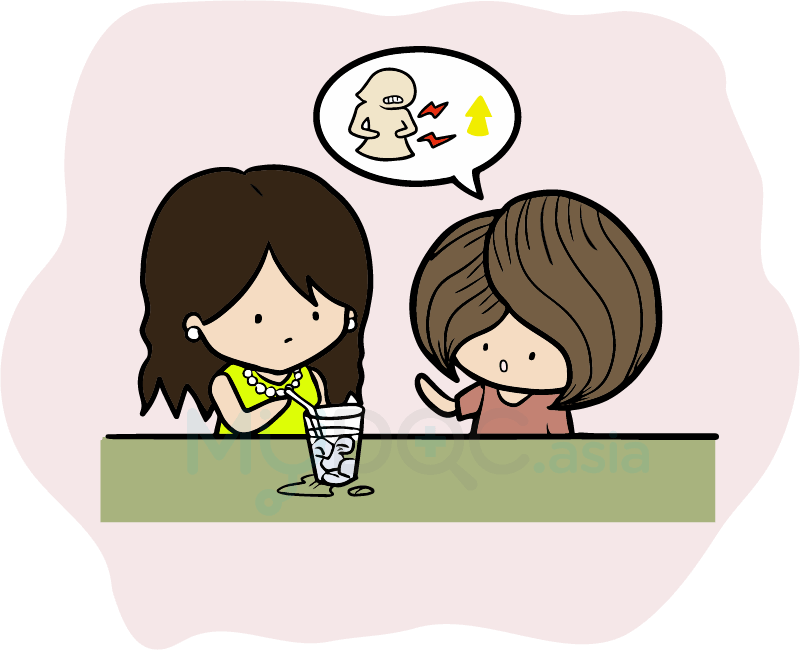
This is what Lisa is most curious to know about. Some women find that drinking cold water or iced drinks would cause period pains, while others don’t. In traditional Chinese medicine, cold foods (iced drinks as well as raw foods) is said to cause your reproductive systems to be unproductive due to the chills, thus it’s not advisable to take during your menstrual periods.
In the Western medicine, the main cause of period pain are excessive prostaglandin (lipids that helps in the recovery at sites of tissue damage or infection) secretion, lack of exercise, psychological stress, as well as possible pathological (extreme) changes at female reproductive organs.
So, is it true that cold drinks can affect menstruation?
According to medical research, cold drinks do cause peritoneal vasoconstriction. Peritoneal vasoconstriction refers to the narrowing of blood vessels (due to the tightening of muscles) at your thin abdominal wall that also covers your uterus, bladder and rectum. Blood vessels at your abdominal cavity contracts, leading to insufficient blood flow. This is why the best way to relieve period pain is to use a hot pack or drink warm water, that helps you to ease abdominal muscles and reduce abdominal pain. So cold drinks will not directly cause period pain, but for women who experience period pain, drinking cold drinks may intensify the pain.
If you’d ask me, “Juliet, can I drink cold water or iced drinks when I’m having period?” My answer to you is: if you’ve always had period pain, it would be better for you to avoid drinking cold drinks while you’re on your periods! If you’ve been having period pains for quite a long while, which affects your work or studies, do seek professional advice from a women specialist (check our Malaysian gynaecology clinics here! )
7. Not recording your menstrual cycles

Imagine if your “special friend” visits you when you’re having class or working, and you come unprepared… that would be too awkward!
I realised that many women do not have the habit of recording their menstrual cycle. Most often, women who come to consult a gynaecologist (women specialist), they couldn’t tell when their last period is or how long their usual menstrual cycle would last. This is not a good sign. If you have not record your periods, when you seek for a gynaecologist due to period pains or irregular periods, Your doctor may not have details enough to understand your condition.
To understand better about how your body works, I highly recommend you to download smartphone apps that could record your periods – these apps could help you to identify expecting period dates, ovulation, “safe” days, etc. This way, your smartphones could automatically remind you on your next period, and you can be more organised.
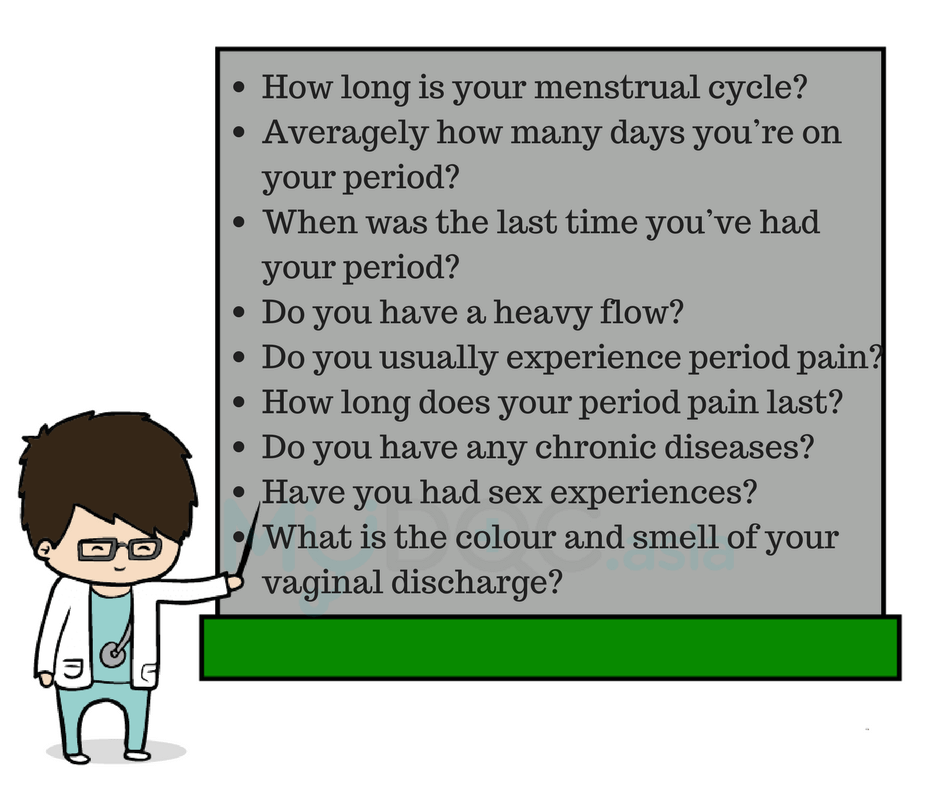
Romeo class time: Generally, a gynaecologist (women’s specialist)would ask you questions based on your situation. The most essential questions would be:
“Juliet, these 7 things to avoid doing on our periods, I’ve actually done them before. Thank you for reminding me!”
"You're welcome, if you want to know more, just check out my other write-up on foods to avoid during your period!"
We often joke at how period is such a fussy issue: "we feel bad when 'she' comes, but we feel even worse when 'she' doesn't come!" What about you? What are your views on this? If you have any questions or opinions, feel free to leave your thoughts in the comments below.





Discussion
Thanks Che Zulfaizah! Happy to help
Let's stay healthy as strong women!
Hi Sherry ?
Many of us have this question, too!
Make sure you don't commit any of these Feminie Care Mistakes here, and also consider eating these Foods For Optimum Feminine Health!